- 4192 Devonwood Way, Ashburn, Virginia, 20148
- Helpline: +1 (703) 665-3747
Take Care of Healthcare Workers during the Pandemic
- Home
- Back to Journal
- Article Details
The impact of the current COVID-19 pandemic is deeply felt in healthcare industry throughout the world. Clinical care for COVID-19 patients puts a high burden on healthcare workers (HCW) due to the intensity of care and length of hospital stay. The concurrent changes and delays in regular care and implementation of social distancing and eHealth facilities ask for a huge day-to-day flexibility of HCW. Due to shortage of protective materials HCW are at a higher risk for COVID-19 infection, and HCW mortality has been reported worldwide.
This pandemic adds to the already existing physical and psychological burden in HCW, due to irregular working hours, heavy physical work, occupational stress and emotional challenges. Prior to the COVID-19 pandemic over 200.000 Dutch HCW, facing a shortage of 80.000 colleagues in 2022 [1], participated in a nationwide strike demanding better working conditions, reduction of work load and better salaries. During the first COVID-19 outbreak many politicians and hospital managers voiced their appreciation of HCW, but proposals for better salaries failed to come through parliament.
To substantiate the impact of the COVID-19 pandemic on the daily lives and well-being of HCW we report the self-reported Quality of Life (QoL) of HCW in The Netherlands prior and during the pandemic. QoL was assessed using an online survey (Q-life App) in 52 HCW, including doctors, nurses, paramedics, medical students, and PhD candidates. The App supports selection of 3-5 factors most relevant for their personal situation from a list of 16 factors. Participants weekly rated limitations in these personal factors on a 1-5 point Likert scale during an 8 weeks period during the outbreak. Data were compared with scores collected prior to the pandemic, in November 2019 (n=23).
During the peak of the pandemic, mean QoL in HCW was significantly worse compared to QoL-scores prior to the pandemic (p<0.001). Eight weeks after the peak of the pandemic, QoL-scores improved but were still significantly worse compared to the pre-pandemic data (p= 0.004), indicating a prolonged negative effect of the pandemic on QoL. During the pandemic higher numbers of hospital admissions, and higher COVID-19 mortality rates, as reported by the Dutch government, correlated with lower QoL scores in HCW (r = –0,763, p = 0,028, and r = –0,697, p= 0,055, respectively, Figure 1).
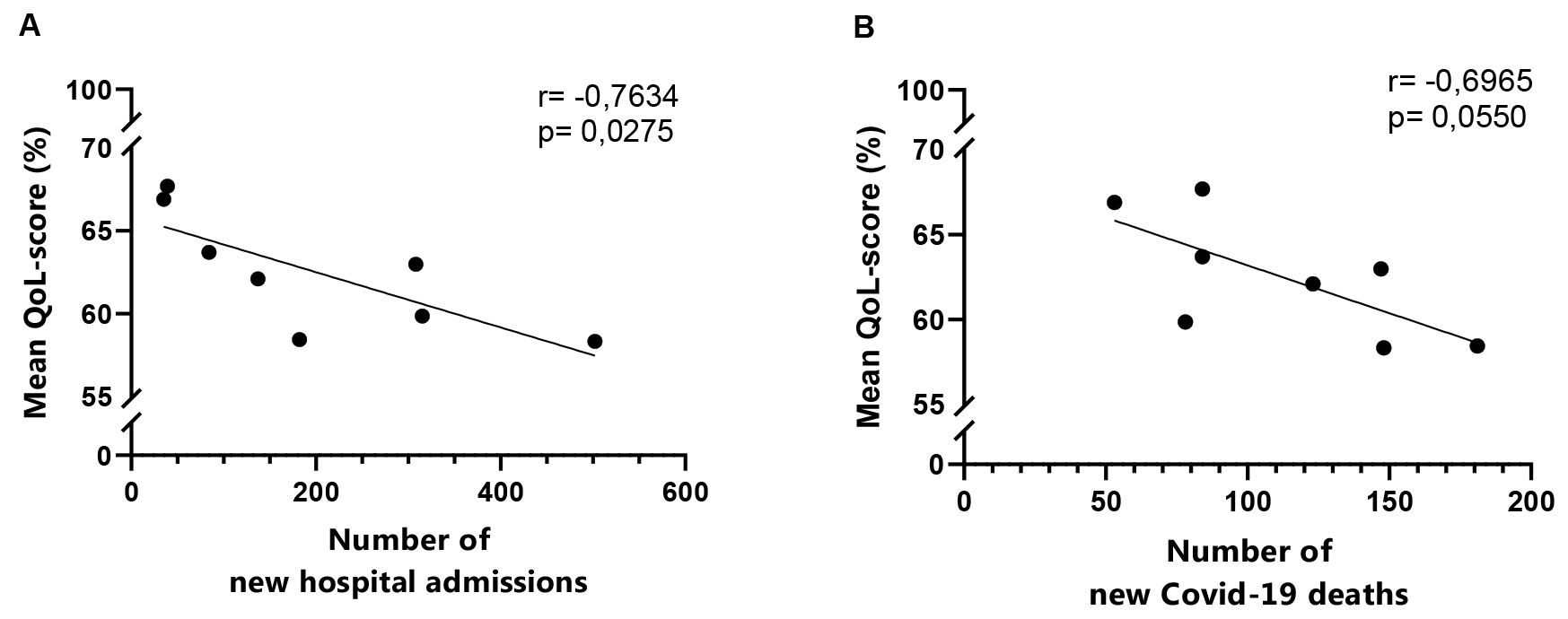
Figure 1. correlation between mean QoL-score and hospital admissions and deaths.
Current data show that the COVID-19 pandemic significantly deteriorates QoL of HCW and importantly increases their already high work load burden experienced before the first wave. The clear negative correlation between QoL and severity of the pandemic raises the suspicion that this burden will not be substantially relieved with a high risk of loss and burn-out of HCW during the coming months or year.
These data should be taken seriously, because there is still a long way to go before the health care system will return to normal. In a recent survey conducted by the labor union in The Netherlands, approximately 60% of HCW reported increased workload and work stress during the pandemic, while roughly 50% of HCW reported work-related emotional and physical exhaustion. Consequently, a substantial percentage of HCW are considering to cut down on working hours or even leave the health care system (respectively 16% and 10,6%) [2]. Recently, hospitals in The Netherlands reported more than doubling of sick leaves in HCW, while the actual number of COVID-19 admissions was quite low [3]. Also during other infectious disease outbreaks high prevalence of depression, anxiety and sleep disturbance in HCW was reported [4]. After the Severe Acute Respiratory Syndrome (SARS) outbreak in Hong Kong in 2002 both an immediate and a long term negative impact on mental health of HCW was reported [5].
Currently, we are in the midst of the COVID-19 crisis worldwide. Next months will add other health care issues, related to the resumption of postponed regular care. Therefore, it is of utmost importance that measures are taken to assure and improve well-being of HCW. In response to the issues caused by the pandemic, the Dutch government has announced a bonus of 1000 euro for HCW directly involved in the care for COVID-19 patients as a token of gratitude. Doctors and others are not eligible for a bonus since their income is deemed sufficient. Although this bonus does provide some compensation for a small portion of HCW, it does not provide a sustainable solution. In The Netherlands, the average salary of nurses is less than that of other professionals like high-school teachers, police officers or lawyers.
We now already see that the COVID-19 crisis is followed by a severe financial crisis with lots of bankruptcy and job losses. The European Union decided to invest in extensive support funds for economies and crucial companies. Our data show that also our health care system and their HCW are at risk and that proper investments should be considered seriously.
References
- Ministry of Health (2019) Welfare and Sport. Monitor: improvement program working in healthcare.
- The Netherlands Trade Union Confederation (FNV). Health care survey. 2020. [View]
- Tilburg: Brabants Dagblad (2020) ETZ Tilburg: ‘Hoog verzuim zorgpersoneel dat werkte tijdens coronacrisis’. [View]
- Lai J, Ma S, Wang Y, et al. (2020) Factors Associated With Mental Health Outcomes Among Health Care Workers Exposed to Coronavirus Disease 2019. JAMA Netw open 3: 203976. [View]
- McAlonan GM, Lee AM, Cheung V, et al. (2007) Immediate and sustained psychological impact of an emerging infectious disease outbreak on health care workers. Can J Psychiatry 52: 241–7. [View]